
Hutsitwa
Another remarkable woman

In these times, my thoughts have turned to other failures in my career. Proposals not accepted, proposals never finished, pitches ignored. One proposal that I worked hard on and which was never accepted was a book about fear. This was the opening section:
I can’t go on, I must go on
Samuel Beckett
I used to play a game in my head. Usually, it went like this: On a street, I can be killed by a car. If I am on a bike, I can be killed by a car, or a bus, or a truck, like the boy whose head was crushed under the back wheels of a lorry, when I was at school. If I am on a train, it can derail. If I am on a tube train, it can be halted in a tunnel, and I can suffocate. If I escape, the escalator can catch fire, and I can die burned alive. If I’m on a ship, it can hit an iceberg. If I’m on a plane, it can crash. It can collide with another plane, because the skies are crowded, and the air traffic controllers are overworked and human.
If I never leave my house, I can die of carbon monoxide poisoning when my heating malfunctions. If I escape to the garden, I can electrocute myself mowing through the lawnmower lead. I can choke on a bone. I can get salmonella, or meningitis, or CJD. I probably have them already. If I stay indoors, in a solid building, it can collapse, or explode. If I go to a safe place in the middle of a desert, where nothing can touch me, I can die from lightning. The sky can fall on my head. If I wear rubber-soled shoes in this safe place in the middle of a desert, where nothing can touch me, my body can kill me as it likes, with a heart attack, or a brain haemorrhage, or a spontaneous combustion.
But when I was 20 or so, I decided I could never win. I couldn’t think of anywhere that was safe.
One of my proposed chapters featured a woman called Maggy Barankitse, who I met in Burundi in 2004. She is an amazing woman and still amazing. Here is an account of what she has been up to, which includes becoming an exile. By the way, instead of writing a book about fear, I ended up writing The Big Necessity. So, no regrets. It was a good proposal though.
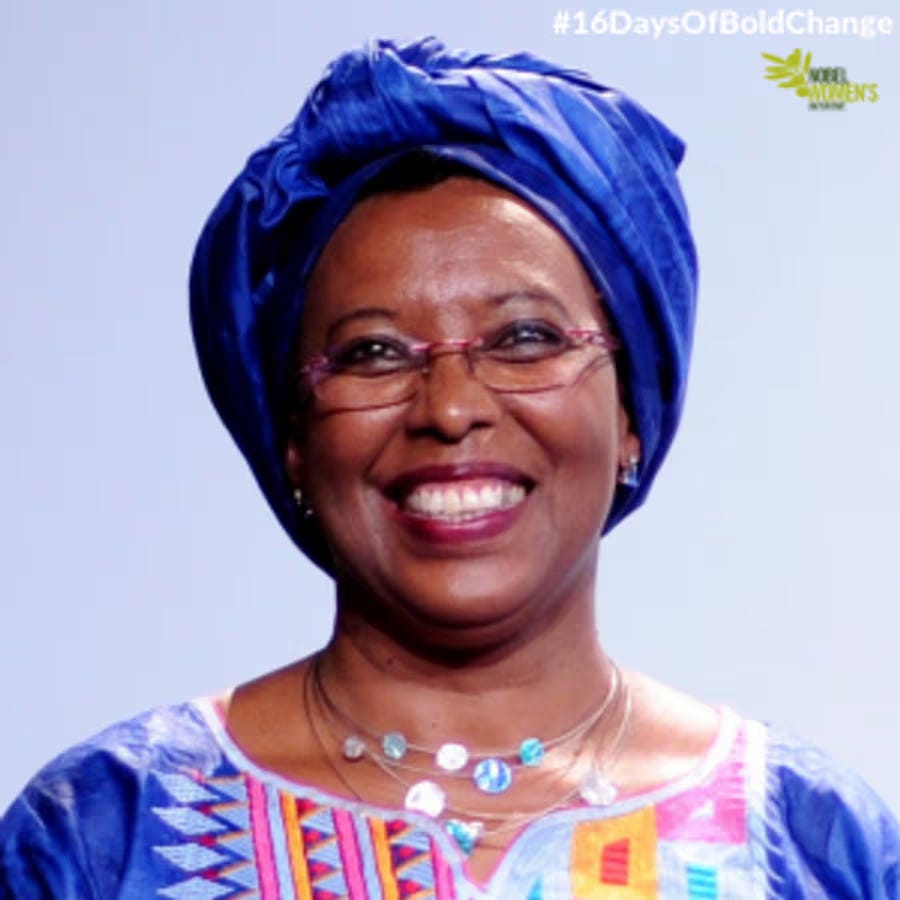
Here is what I wrote about her, and about Burundi. It’s pretty long. Make a cup of tea and settle in.
Each morning in Bujumbura, you can read a long list of things you didn’t see, and screams you didn’t hear. Every day, local news agency Azania rounds up the night’s activities, and it is always grim reading. 17 July: Three dead in a rebel attack at Gakenke. A rebel attack in Rumonge commune. A civilian beaten to death by soldiers. A rebel attack in Kayanza. The rebel leader Jean-Bosco Ndayikengurukiye rejects a new peace accord. In security-speak, in an enduring war, this is “nothing to report.”
Poor little Burundi. Eclipsed in disaster by its neighbours Congo and Rwanda, but equally troubled. One of the poorest and most densely populated countries on the planet, it has been at war for ten years, officially, and conflicted for nearly 50. It’s my first time in Africa, and I have started in one of its darkest hearts.
We are three, the British tourists in Burundi, all visiting friends who work for NGOs, all bewildered by the discrepancy between reality and expectation. “I thought I was coming to a war zone,” says Laurence, “And the first day they take me to play golf.” I think the same, drinking aperitifs at sunset overlooking Lake Tangyanika, or sailing on its deep waters, the outlines of Congo’s mountains in the distance. I think the same when, the first weekend, we go dancing at Havana club. A statuesque woman is guest-singing, and she belts out Gloria Gaynor’s “I will survive” with passion. “I bet there are some survivors out there!” she says afterwards, in an American accent – for she’s actually the head of a UN office here - and the small crowd, Burundians and expats, shout back with feeling. They dance with a peculiar intensity, more than a usual Saturday night crowd, because of the 11pm curfew, or because constant war winds people so tight, they release at full-steam. The aerobics classes here are unusually punishing, too.
A drive through Burundi’s capital Bujumbura gives little taste of “the crisis”, as Burundians call their latest conflict. Dusty streets, flat African buildings, a bustling market, women carrying manioc. On Sundays, you will see Bujumbura’s middle-class puffing through the streets on the weekly organised walk. The churches are always full (Burundi is 80% Catholic and almost 100% Christian). There are basketball games and football matches, weddings, funerals, all the usual trappings of life, all reasons for Bujumbura to be nicknamed “the bubble.” It works hard at keeping the war away: The city roadblocks go up at 4.30pm, shutting out the rest of the country, and you can turn down the volume of the background war. But the noise is still there.
At the French ambassador’s Bastille Day party, held at his sumptuous hillside residence, it is all tinkling glasses and pungent Brie, and speeches of liberty and fraternity. Holding his champagne, an NGO worker says, “my cook’s wife and child are missing.” At Kavumu, on this same hill, as the party drifts on, soldiers are busy hunting rebels, and rebels are fighting soldiers, and civilians are making their way into town with bullet-holes in their back.
****
What are the results of eight years of war? The usual: Fatigue, bitterness, despair. Malnutrition, malaria, displacement, a mess. More death threats to NGOs from ex-employees than in most places. A country emptied of a third of its people, ringed with camps housing its hundreds of thousands of exiles. But the most noticeable thing is quietness. Burundians keep themselves to themselves. They are so good at it, even reticent Rwandans call them impassive. “It is Byzantine,” says a quietly-spoken Catholic priest, about to escape back to Europe. “Everyone has blood on their hands, and everyone lies, all the time.” “We internalise most things,” says Christophe Nkurunziza. “You sit opposite someone, and you wonder who that person sympathises with, and you keep quiet.”
The most common phrase in Burundi is “don’t quote me.” A security briefing reads: “Burundi is a particularly complex and politically sensitive country to work in. Agencies who make statements to the media that imply criticisms of the government face expulsion, suspension or physical threat to the expat or national staff. Be careful at all times in your conversation with contacts, whether social or professional.”
The Catholic priest is certainly careful. He won’t commit himself, or name names. Except for one. “You should meet Maggy,” he says, and smiles at the thought. “She’s quite something.”
Maggy Barankitse is Tutsi, for those who care about such things. She does, but only sort of. “I’m proud of being Tutsi,” she says, over yet another drink in a lakeside bar, where she has arrived from some endless UN meeting, and yet her face still smiles more often than not. But she wouldn’t kill for her identity, unlike her cousin, who led a Tutsi mob into the Hutu bishop’s residence, where Maggy was working on 26 October 1993, and called out the word “Amahoro”, a standard greeting. “Peace!” says Maggy now, jovially, but with a bitter undertone. She hasn’t been able to use the greeting since.
After her cousin said hi, he and his friends stripped her naked, tied her to a chair and got on with slashing to death 72 people with machetes. Maggy saw one person’s head get cut off. She couldn’t do anything, not even for the five children that had been entrusted to her care, and who were hiding in the bishop’s residence, somewhere, though Maggy didn’t know that.
“I recognised the people who were doing it. I called out their names. I said ‘do you want to be criminals?’ They said, ‘oh, you and your theories.’”
The theories weren’t rocket science, though. Maggy used to be a teacher, until she got disgusted by the way that Tutsi kids – the ruling majority in Burundi – consistently got university places, privileges. And equally talented Hutu kids ended up in the banana plantations, just as consistently. She complained, and got sacked and a reputation as a troublemaker. She was given a grant to study in Switzerland. That she came back made her stand out even more: Who chooses to come home to a war zone? “A magazine did a story about me in 1997,” she says. “They called it ‘a saint in hell.’ But Burundi isn’t hell, it’s my home.”
It seems hellish to me. In two weeks in Burundi, I am scared most of the time. Even when I’m not scared, I’m worried that I should be. Like being scared is my defence. I meet a manioc seller in the central market. She wears huge, oversized glasses and a big grin. I take her picture, promise to send it, and never do. Last month, the market was shelled in fighting. Manioc with blood drops.
Yvette, a highly-educated, articulate Burundian NGO worker, says her relatives were killed “by blunt weapons” in 1993. “Everyone is touched by it, but who wants to talk about it?” She asks me not to ask people if they are Hutu or Tutsi. “They’ll tell you the opposite anyway.” Yvette’s father often rages that a third of Burundi is intermarried, and that divisions are pointless and political. “How can you tell? How can you tell if you’re Hutu or Tutsi? How can you tell who is pure?” I meet a young journalist, Aloys Nyoyita, who refers to ethnic divisions as “tendencies.” He says, “I am Burundian, so I have to know how to orient myself. It’s harder for outsiders. Look at me, I am tall and thin. What do you think I am?” But I get it wrong.
****
Under the authoritarian regime of Colonel Jean-Baptiste Bagaza, who ruled Burundi between 1976-1987, using the words “Hutu” or “Tutsi” could get you thrown into jail. There was no ethnic violence, but no human rights either. Now, it’s unclear whether it’s better to use them or not – my aid-worker friends refer to Teapots and Hats - so I tiptoe around the sing-song syllables. Michael Courtney, the Vatican ambassador in Bujumbura, is annoyed by them. He says he doesn’t encourage himself to think “in that categorising fashion.” My aid-worker friends, perhaps mindful of the same thing, or just not wanting to annoy unduly, prefer the ethnic terms Teapot and Hat.
The only other person who says this is the head of Burundi’s state news agency. “We don’t ask if someone is Hutu or Tutsi,” states Evode Ndayizigiye. “We take them on blindly, by test.” He thinks for a minute, then remembers, “my driver is Hutu!”. In fact, Burundi’s state media is almost entirely Tutsi, as is the army, the university, all the organs of power.
In aid circles, Burundi is classed a Complex Emergency. But it’s actually about the simple things: Power, self-preservation, cynicism. It’s described as ethnic conflict, when anyone bothers to notice it at all, and the sing-song syllables of Hutu and Tutsi make it easy to categorise, compute, dismiss. Oh, it’s just like Rwanda. Tribal hatreds. Pesky Africans. Christophe Nkurunziza, a radio journalist at independent station Studio Ijambo, says the conflict here is ethnic, and his colleague snorts in derision. “It’s not ethnic, it’s political.” “It’s not political, it’s ethnic.” And so on. Actually, it’s an unholy alliance between the two. It’s about the usual things: Controlling the state. Being on top. Not being underneath. In a poor country, the state is the only way to accumulate money and power. The stakes are high, and picking on someone’s ethnicity – manufactured though it is – is as good a tool as a machete.
Burundi’s three peoples - Twa, Hutu and Tutsi - used to live together fairly harmoniously. The Twa are the shortest, least populous and usually ignored. The Hutu are the 85% majority, the Tutsi the minority. In the late 19th century, British explorer John Hanning Speke set out their differences, as he saw them: Hutus are short with flat noses, descended from negroid peoples from the south. They are backward and ignorant. Tutsis are tall and elegant, more Caucasian, descended from Ethiopians and, further back, from King David. They are the cultured ones.
In fact, Hutu and Tutsi speak the same language, Kirundi (though the elite speak French), worship the same God, and intermarry. The Tutsis herded cattle, Hutus farmed the land. Anthropologically-speaking, they don’t qualify as separate ethnic groups. But they do qualify as a caste system which Belgian colonisers, handed Burundi in 1922, used to divide and rule. The minority Tutsis got better education, better jobs, the run of the civil service and the army. Hutus got not much except disgruntlement. Nobody bothered about the Twa.
Even so, at independence in 1962, Burundians had a ready-made hero. Prince Louis Rwagasore had noble thoughts about unifying and getting along. But he was assassinated, like independence hero Patrice Lumumba in next-door Congo, and the skewed society has been reeling along ever since. Coup and massacre, massacre and coup, in a horribly predictable pattern. In 1965, a Hutu coup triggered the murder of the entire Hutu political elite. In 1972, after another coup, the Tutsi-dominated army hunted down every city Hutu with primary school education or above, while Tutsi and Hutu killed each other in the hills. 200,000 people were killed (or forty times the World Trade Center toll), 300,000 ran. It was the first time anyone used the word “genocide”: Each “ethnicity” decided the other wanted to exterminate them, and no-one has yet changed their minds. Burundi and Rwanda are the only African countries with just two ethnicities, an academic tells me. In a bipolar situation, it becomes much easier to mobilise your own ethnic group against the other. French philosopher Rene Girard calls this mimetic desire: The two sides are so similar, they aren’t fighting over differences, they just want to become the other by subsuming it. But I prefer non-academic wisdom: In Burundi, you know your enemy.
More massacres in 1988 were followed by peace initiatives, until Melchior Ndadaye was elected president in 1993. The first democratically elected president, the first Hutu and the first civilian to hold power, he lasted two months, until Tutsi soldiers murdered him - some say with garden implements - and the latest war broke loose. Now, Hutu rebels fight the mostly Tutsi army, in an alphabet-soup of party acronyms: FDD and CNDD, (armed Hutu factions), FRODEBU (a Hutu political party), FNL, UPRONA, AVINTWARI, INKINZO, PIT (all Tutsi). Some, says someone, “only represent their garden and their cat.” They are all venal and vile, as far as I can tell. The FDD signed a ceasefire in December, and was ambushing passenger vehicles by August. The FNL launched an assault on the capital, two months after “their” Hutu president Domitien Ndayizeye was sworn in, to make their point. 200 corpses.
****
Maggy’s not that interested in politics, though she’s invited to speak to committees, though she wins enough prizes to wield weight (the latest, the “Children’s Nobel”, was awarded by a panel of children). She flashes with fury at bureaucracy, which is understandable in a system which cancelled a high-level meeting about refugees because it fell on World Refugee Day, which the UN takes as a holiday.
She gave up politics after that day in the Bishop’s house, and became a mother instead. She’s had about 5000 children so far, in the three orphanages she set up pretty much single-handedly, in the southern province of Ryugi. If this wasn’t her home region, and if she bowed to logic or fear, she’d have set up somewhere else: It’s only a few miles from the Tanzanian border, where hundreds of thousands of Hutus languish in camps as big as cities, with dangerous despair, and the football teams double as militia. Maggy’s orphanages – Maison Shalom, Maison de la Paix and Casa della Pace – are in the fast lane of the rebel fighter M1.
“Military and rebels are as bad as each other,” she says. “They nick everything.” Usually, they want things from her in this order: Money, car, food, life. She’ll give them everything down to the food. “They have come to kill me many times. They come with hate and words of hate. I invite them in, sit them down and offer them something to drink and I say “we’re going to write a testament and you’re going to explain why you need to eliminate Maggy.” I say, do you want the car or do you want Maggy’s life and the car?”
I ask her to repeat this story, as I can’t believe she’s that deranged. She does, and says, “sometimes I stand in front of the orphanage door all night. I go to the scene of attacks, because that’s when people need help. There’s no point going afterwards.”
I try to talk to Maggy about courage and fear, but she doesn’t really understand what I mean. I mean, she doesn’t bother putting words to such things, same as she doesn’t need to capture the way her lungs exhale, every day. She made a mental contract back in 1993, with herself, and she proceeds according to that. I can’t imagine seeing Hillary Rodham Clinton standing in front of Maggy’s orphanage door, in the dead of night, but something she said in her graduation speech could be for Maggy: “Fear is always with us. But we just don’t have time for it, not now.”
Of course Maggy has God in the background, which helps, along with the dozens of children to care for before she cares for herself. She hasn’t got time to be scared, or to admit it. It’s only there, when sometimes a sentence will trail off. When she stops laughing for a minute, which is rare. “People say, ‘Maggy works with whores and rebels!” Then: “When there is trouble I put the kids to bed and go and stand in front of the door. I stand there, wondering if….”
But she stops the train of thought, tells tales instead, about her kids, how they deal with what they have been dealt. Back in 1994, children were coming to her with their eyes poked out, their fingers cut off. They were mutilated in the hills. Some girls had been penetrated with bamboo. These days, they come with their faces blown off by grenades. The girls still get raped, because of those sing-song ethnic syllables. Hutu. Tutsi. Twa. “We say we’re Hutsitwa. We laugh about it. One girl had three fingers cut off by rebels. The other kids said, ‘you can’t get married! where would you put your wedding ring?’”
Kids say to the HIV positive kids, “can we borrow your HIV so we can get more food?’ The HIV positive kids say ‘no. if you borrow it, you have to keep it.’
Maggy takes a sip of water. It’s late in the evening now, and she’s been at meetings all day. So have I. But I’m tired and grumpy, and the one with the machete anecdotes isn’t. She has been shouting at her national representatives as usual, in a country where no-one raises their voice, usually. “The wound here is very deep. Whoever sets out to asphyxiate us can do it. I ask myself all the time why our politicians are so arrogant but I don’t know.”
She laughs, again. “I’m an impossible woman.”