
Pull your buttocks towards your knees
And some monks and a dog

Namaste
I have a conflicted relationship with yoga. I’ve done it for years, off and on. I’ve done it in West Yorkshire and Goa and hotel bedrooms. I’ve done it assiduously — usually in January, when online yoga teachers always offer a 30-day challenge and I can’t resist it — and not so much, like now. Mostly, I love it. I love that when I do it consistently, I feel less tight and creaky. Running tightens muscles; yoga lengthens them. I love that I am good at some poses and truly awful at others. My shoulder rotation is shonky, I still can’t get my heels to the ground in downward dog. But that’s fine. In general I think yoga is a wonderful thing and everyone should do some.
But I have preferences. Sun salutations are dull and when yoga teachers offer classes that are eg. 100 sun salutations, frankly I’d rather sit on the sofa and eat crisps. But my biggest dislike is the rampant Indophilia of it. Yes, yoga originated in India, but so what. Everything changes and moves. A few years ago I lived in the city centre of Leeds and there was a Virgin gym on the ground floor. I went to the yoga classes, and was taught by a woman with a broad Yorkshire accent (foreigners, “broad” in this context means strong. It seems to only apply to Yorkshire accents and I don’t know why). At the end of her classes, she made us chant in Sanskrit for five minutes. I don’t know what we were saying because I don’t speak Sanskrit and don’t intend to learn it (although I am talented at starting to learn languages then stopping: I’ve almost learned Russian, Arabic, Welsh and Chinese). Everyone else in the class seemed fully OK with the chanting. I thought it was ridiculous. What did Sanskrit have to do with a yoga class in Leeds? Nothing.
There are other degrees of this. In the French village where I have a house, there is a delightful Argentine yoga teacher — Giselle — who comes to the Mairie twice a week and teaches a class that is, as yoga classes often are, 90% women. Chapeau to Patrick, the lone male student. Unlike yoga classes I have attended elsewhere, there are no Lululemon or Sweaty Betty coordinated outfits, or any fashion pressure. People wear joggers and t-shirts. Even in Sweaty Betty-inunundated classes in Leeds, I used to make a point of wearing old race t-shirts and any old shorts. (Sweaty Betty by the way makes really good kit but I don’t think fashion has any place in yoga.) Giselle requires the class to chant Shanti Om, and I also think it’s ridiculous but I understand the point of Om: it’s like mindful breathing, and reduces the heart rate. So sometimes, feeling daft, I sometimes join in.
All this rambling to say that there is one very Indian thing about yoga that does not needle me, and yet I would have thought it would. At the end of a class, it is standard to put one’s hands in a prayer position, hold them to the forehead, then bow forward and say Namaste. I should find this annoying but in fact I love it. I consider all the talk about the “third eye” as scientifically persuasive as the vague yoga talk about “energy,” which is never actually defined (electricity? blood flow? ATP?). Actually there are a lot of expressions in yoga that are baffling such as “pull your buttocks towards your knees.” But there is something that happens when you put your hands in prayer and hold them to your forehead. I can’t explain it, but there is a calmness that descends. It makes me believe we do have a third eye. And there is also something extremely calming about having the hands in prayer position.
Yesterday, an Amazon delivery driver came to the door at my mother’s house, where I’ve been staying to care for her as she’s just had a new hip put in. My brother answered the door and came back into the kitchen with a huge grin on his face. “He bowed to me!” The delivery driver had been Chinese — this was my brother’s guess — and when my brother opened the door, had put a hand to his heart, bowed and said, “good morning!” What a beautiful gesture.
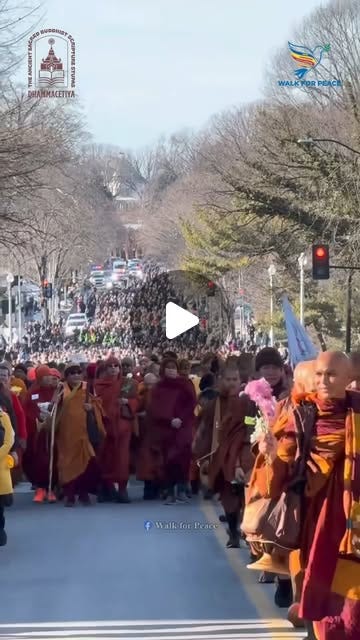
Bowing, hands in prayer: they are so much more elegant than a boring handshake. They have such grace and power. I’m going to stop handshaking and start doing classy Asian greetings instead. I’ve been thinking this because I’ve been following the progress of several Buddhist monks who have walked over 2300 miles across the US from Texas to Washington DC. At first, nobody really paid them attention, even though they were walking with a very charming dog called Aloka — who adopted the monks when they did an earlier walk through India — and although the sight of several men with shaved heads dressed in maroon and saffron robes (sometimes they wore hats and ski gloves and boots depending on the weather) walking single file, steady and unrelenting, along American highways: well, it’s quite arresting. The walk is called the Walk for Peace, and it has been a treat to watch online. As the monks got further east, their following grew, and soon they were greeted by fans in every place they walked. What struck me was how many people stood by the side of the roadside, their hands in prayer — and the monks greeted them with the same gesture — and seemed emotionally overwhelmed. By some monks walking.
I understand that. The world seems like a dark swirling tornado of bleakness at the moment. The monks, with their colourful robes, and their quiet determination to do something as simple and yet as extremely difficult as to keep walking, were a dose of peace. And this peacefulness was demonstrated by that beautiful gesture: hands to prayer at the chest, and a slight bow or nod. Beautiful.
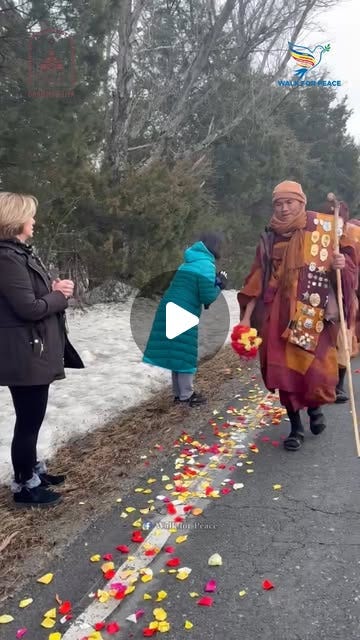
People on their knees.
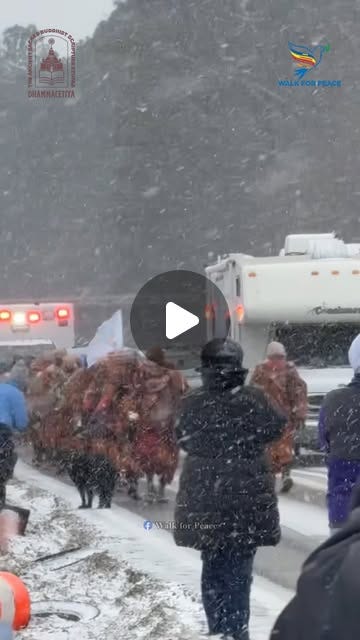
And the arrival in Washington DC.
Britain’s Biggest Model Railway
Something else that seems to give people peace and some calm: railway modelling. My brother is building the country’s biggest model railway and hoping to exhibit it soon. He departs every day to his factory basement, where he is building his railway. And you can follow his progress on his weekly Youtube updates. I have zero interest in model railways, though I deeply admire his artistry, and I’m very proud of him. Follow him please.
Animal Hero of the week
Obviously it’s Aloka the Peace Dog.
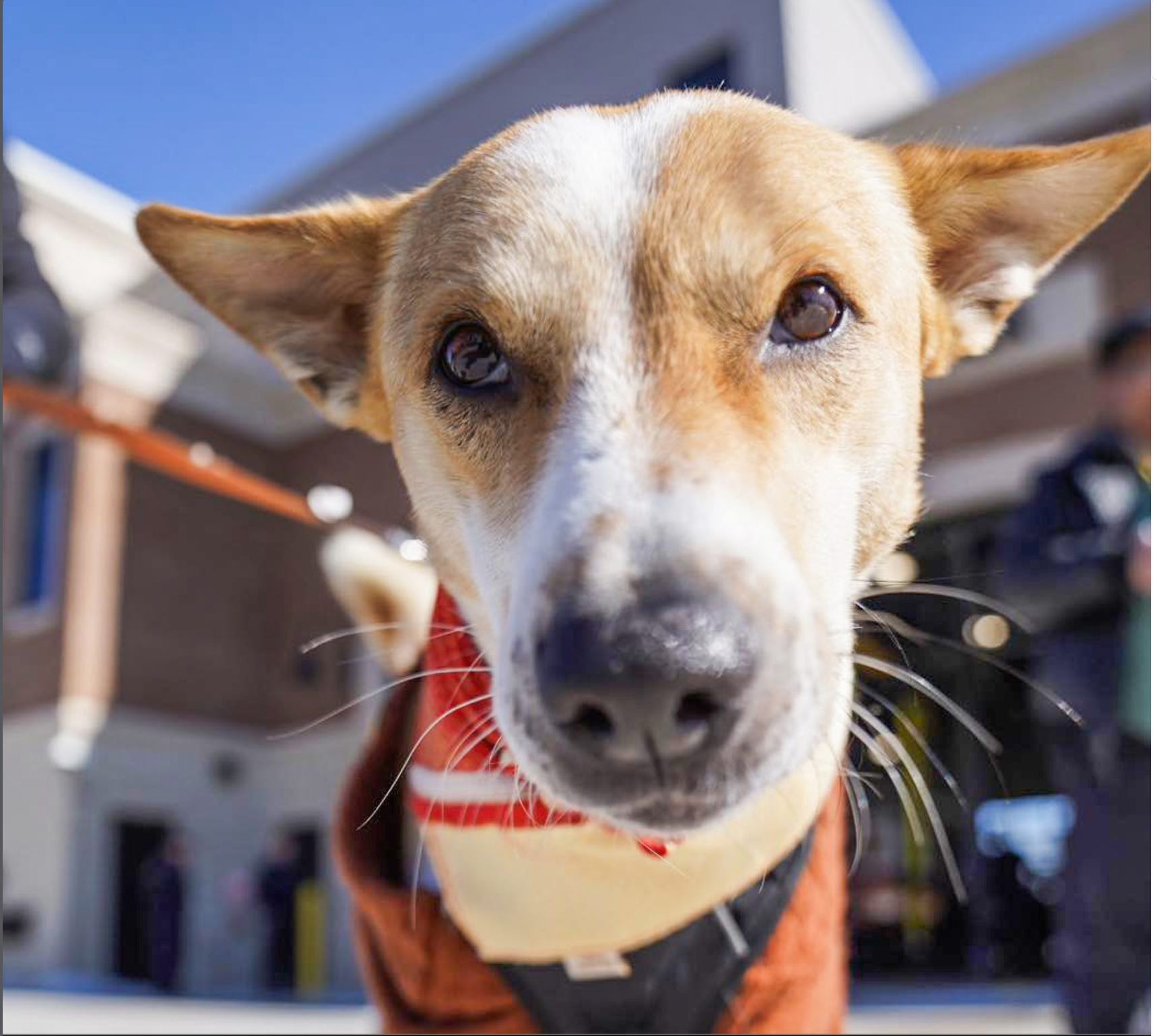
Aloka followed the monks for 106 days when they did a walking pilgrimage through India. He set off, probably with the intention of walking the whole 2400 miles, but had to have surgery for a knee injury, so has had his walking duties reduced. He’s still very famous and though he is not known for making the hands in prayer gesture — its official yoga name is Anjali Mudra — he has touched thousands of people and become a social media star, as much as the monks. The vets who treated him wrote a nice page about him, here. Aloka means light or illumination. In Sanskrit, ha.
I spent a blissful month in Japan last year and could not have enjoyed the bowing (and absence of hand shaking) more. It felt so genuine and quiet, and weirdly instinctive
You could of course use the Benedictine monastic bow, hands in your sleeves and a bow - often accompanied with ‘Peace be with you’.